Why this matters
Attic ventilation is one of the least glamorous parts of a roofing system and one of the most consequential. The idea is simple: outside air enters low, usually through soffit vents, and exits high, through ridge vents, static vents, or powered fans, carrying heat and moisture out with it. When that airflow path is blocked, undersized, or missing entirely, the attic turns into a heat trap in summer and a condensation trap the rest of the year — and both of those outcomes attack the roof from underneath, where you can't see it happening.
Florida makes this worse in two specific ways. First, attic temperatures here regularly climb well above outdoor air temperature on sunny afternoons, and that heat radiates down into living space and bakes the underside of shingles and the roof deck itself from below. Second, Florida's humidity means any trapped moisture — from cooking, showers, or simple air infiltration from the house below — has fewer chances to dry out than it would in a drier climate, which is exactly the condition mold and wood rot need.
How intake and exhaust are supposed to work together
Ventilation only works as a system, not as isolated vents scattered around. Soffit vents (intake) need to stay clear of blown-in insulation, paint, or debris, or they stop drawing air in no matter how much exhaust ventilation is up top. Ridge vents, box vents, or power/solar attic fans (exhaust) need enough net free area to match the intake, and they need to actually be positioned at the highest point of the attic to pull hot air out rather than just recirculating it.
A common and avoidable mistake is adding exhaust ventilation — a bigger ridge vent, an attic fan — without checking whether intake airflow can keep up. An underpowered intake with an oversized exhaust fan can actually pull conditioned air up from the living space through can lights and attic hatches instead of pulling in outside air through the soffits, which drives up cooling costs instead of lowering them.
Warning signs of a ventilation problem
- An attic that feels noticeably hotter than expected when you go up on a summer afternoon, well beyond normal outdoor heat.
- Visible moisture, rust on nail heads, or dark staining on the underside of the roof deck or on rafters.
- A musty smell in the attic or in upstairs closets that share an attic space.
- Shingles that appear to be aging unevenly — curling or granule loss concentrated on one roof plane, which can point to localized heat buildup rather than a material defect.
- Noticeably higher summer cooling bills than a similar-sized home nearby, with no other obvious explanation.
What this means at re-roof time
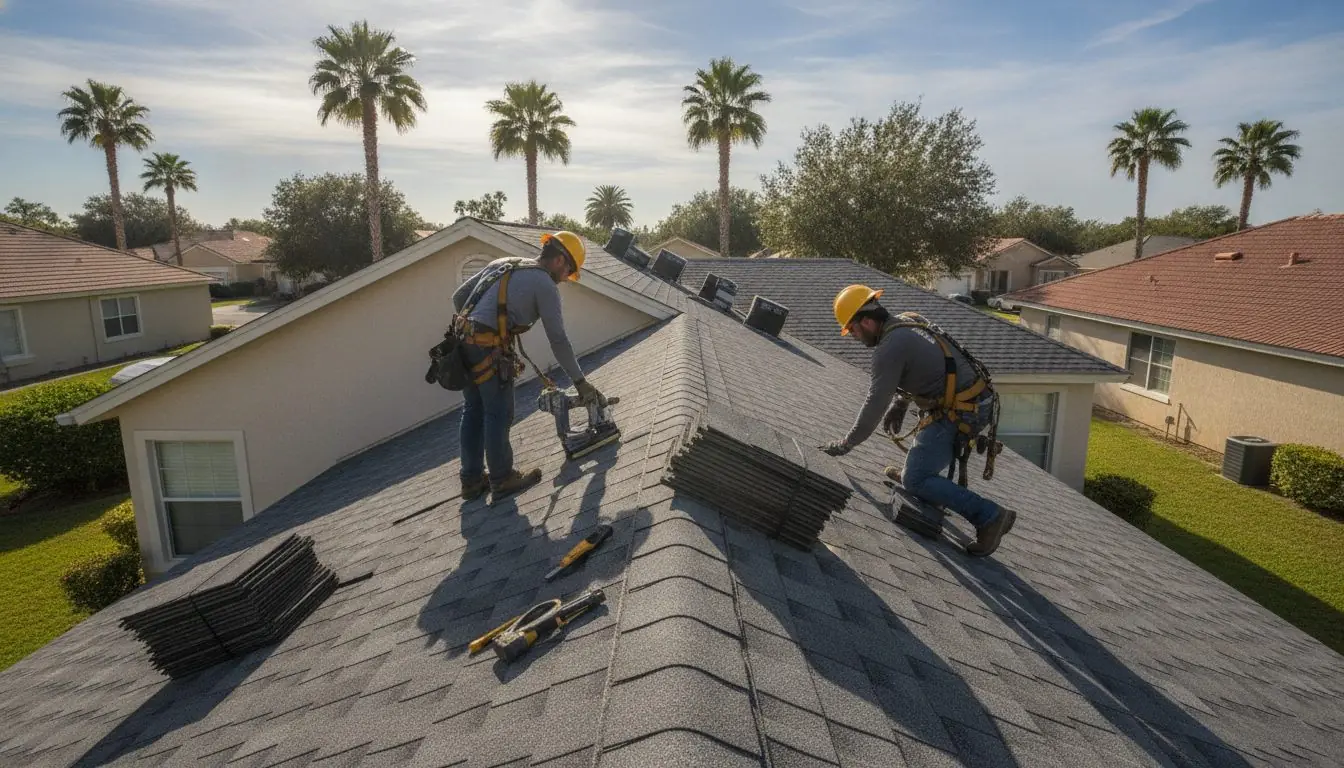
A roof replacement is the natural point to fix a ventilation problem, since the deck and old vents are already exposed. A proper ventilation plan is sized to the attic's square footage and existing intake, not just bolted on because it's a popular product — a ridge vent added to a home with no working soffit intake accomplishes very little. This is also the point where an inspector can check for existing moisture damage to the decking itself, which needs to be addressed before new material goes down, not covered up underneath it.
Recommended next step
If you're not sure whether your attic is ventilated correctly — or you've noticed any of the warning signs above — a roof inspection should include an attic-side look, not just a walk on the shingles. That's the only way to see whether intake and exhaust are actually balanced.
Request a Free Inspection