Why this matters
Solar panels don't have moving parts, and there's no engine to service — that's part of their appeal. But a dirty or shaded panel produces measurably less power than a clean one, and small issues (a loose connector, a cracked junction box, a shading problem from a tree that's grown since installation) are much cheaper to catch early than after they've caused a bigger drop in production or a safety issue. A little routine attention protects the investment.
How often panels actually need cleaning
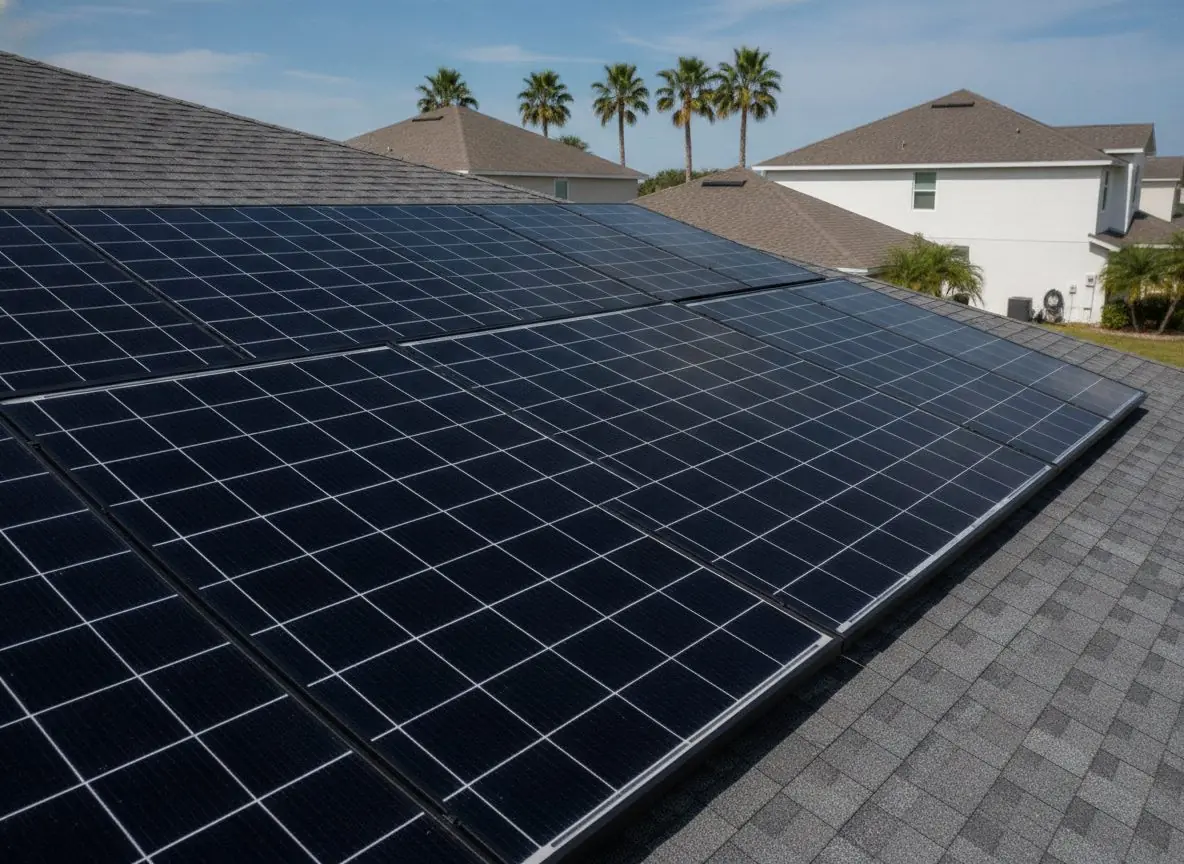
Florida's climate creates a specific maintenance profile: frequent rain does a decent job of naturally rinsing panels, but heavy spring pollen, dust from nearby construction or dirt roads, salt air near the coast, and organic debris (leaves, small branches, bird droppings) can build up faster than rain alone clears it, especially on lower-pitch roofs. As a general guideline, a visual check every few months and a real cleaning once or twice a year is reasonable for most Central Florida homes — more often if your property has heavy tree cover, is near a construction zone, or is in a coastal area with salt buildup. If you notice a visible dulling or filming buildup on the panels, or your monitoring app shows a production dip that doesn't line up with cloud cover, don't wait for the schedule — clean or inspect sooner.
How to clean panels safely (or when to call someone)
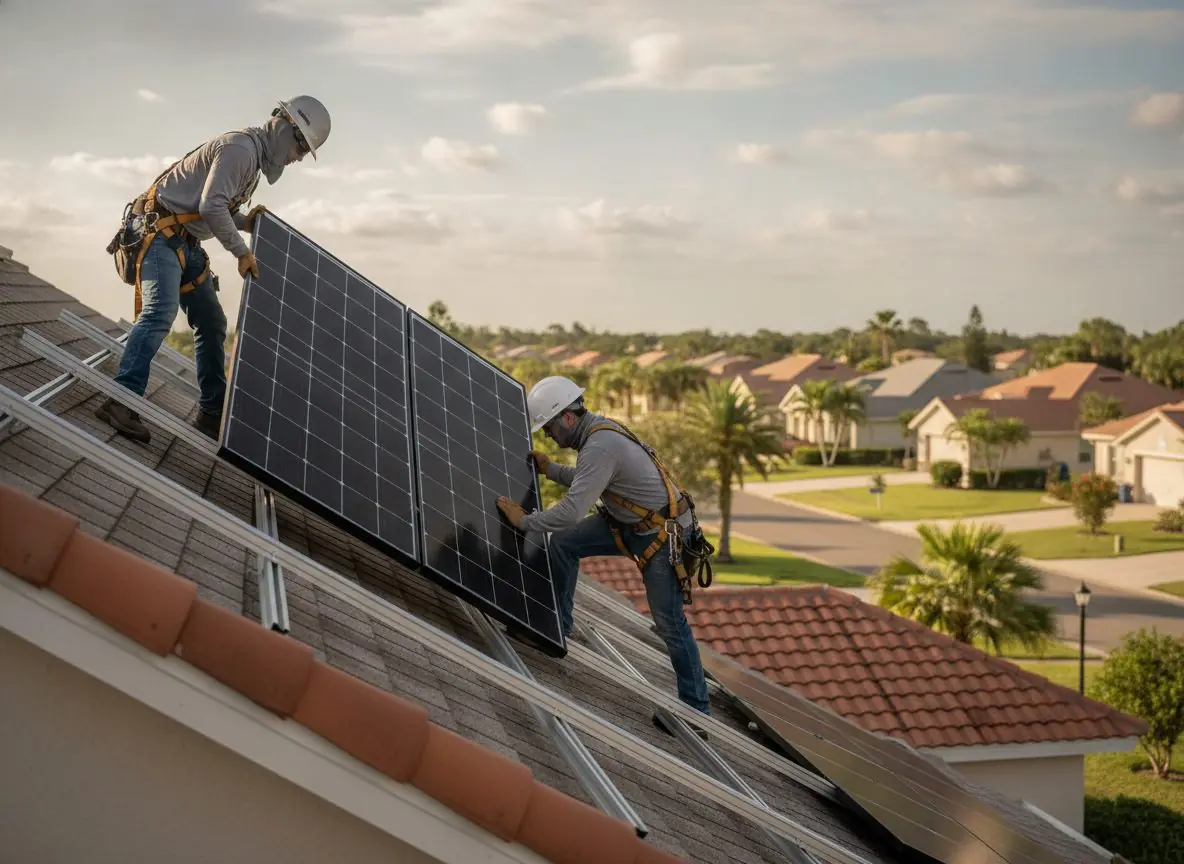
For ground-level or easily reached systems, a gentle rinse with a garden hose and, if needed, a soft brush or squeegee with plain water (no harsh detergents, which can leave residue or damage anti-reflective coatings) handles most routine buildup. The bigger issue for most homeowners is access: panels are on a roof, which means cleaning them safely involves the same fall-risk considerations as any other roof work. Walking on panels or racking not designed to be walked on can crack a panel or damage mounting hardware, and roof pitch, wet surfaces, and ladder placement all carry real risk. For anything beyond a first-floor, easily accessible array, it's worth having a professional handle cleaning as part of a broader roof and system check, rather than treating it as a weekend DIY project.
What to check during a maintenance visit
- Visible cracks, discoloration, or hot spots on panel surfaces.
- Secure racking and mounting hardware — no loosening from wind events or thermal cycling over time.
- Wiring and connectors for wear, corrosion, or rodent damage, especially where cabling runs through the attic or along the roofline.
- Inverter status and error history — most systems log faults even if they aren't obvious from the ground.
- New shading sources — trees and neighboring structures grow and change; a system designed for full sun five years ago may have new shade issues today.
- Overall production data compared to expected output for the season, using your system's monitoring app if available.
Warning signs that mean it's time for a professional inspection
A sudden, unexplained drop in production, visible physical damage to a panel or its mounting, a burning smell or discoloration near the inverter or electrical connections, or any storm event with visible impact to the array all warrant a professional look rather than a wait-and-see approach. Since Crownline evaluates the roof and the solar system together, a maintenance visit can also catch roof-level issues — like a compromised penetration or flashing — before they turn into a leak underneath a system that's otherwise working fine.
Recommended next step
If it's been more than a year since your system was checked, or you've noticed a production dip you can't explain, a combined roof-and-solar inspection is the most efficient way to rule out both a solar issue and a roofing issue in one visit.
Request a Free Inspection