Why this matters
Almost every roofing proposal mentions a warranty, and almost every homeowner assumes it's one thing. It isn't. A manufacturer warranty and a workmanship warranty cover different failures, are backed by different parties, and have different terms. A roof can fail a leak test with a "50-year warranty" still technically in force if the leak traces back to installation error rather than a material defect — and vice versa. Understanding which warranty applies to which kind of problem is what actually protects you, not the headline number on the sales sheet.
Manufacturer warranty: covers the material
The manufacturer warranty is a promise from the shingle, tile, or metal panel maker that the product itself won't fail due to a manufacturing defect — granule loss, cracking, or premature deterioration that traces back to how the material was made, not how it was installed.
- Standard manufacturer warranties on architectural shingles typically run 25–50 years, but coverage is prorated after an initial full-coverage period — the payout for a defect found in year 30 is not the same as one found in year 3.
- Enhanced warranty tiers (the "Golden Pledge"-style programs discussed in our GAF vs. Owens Corning vs. CertainTeed comparison) can extend coverage and reduce proration, but only when installed by a contractor holding the manufacturer's matching certification.
- Manufacturer warranties almost never cover labor to remove and replace the defective material after the first few years — read the labor-coverage period specifically, not just the headline material-coverage number.
Workmanship warranty: covers the installation
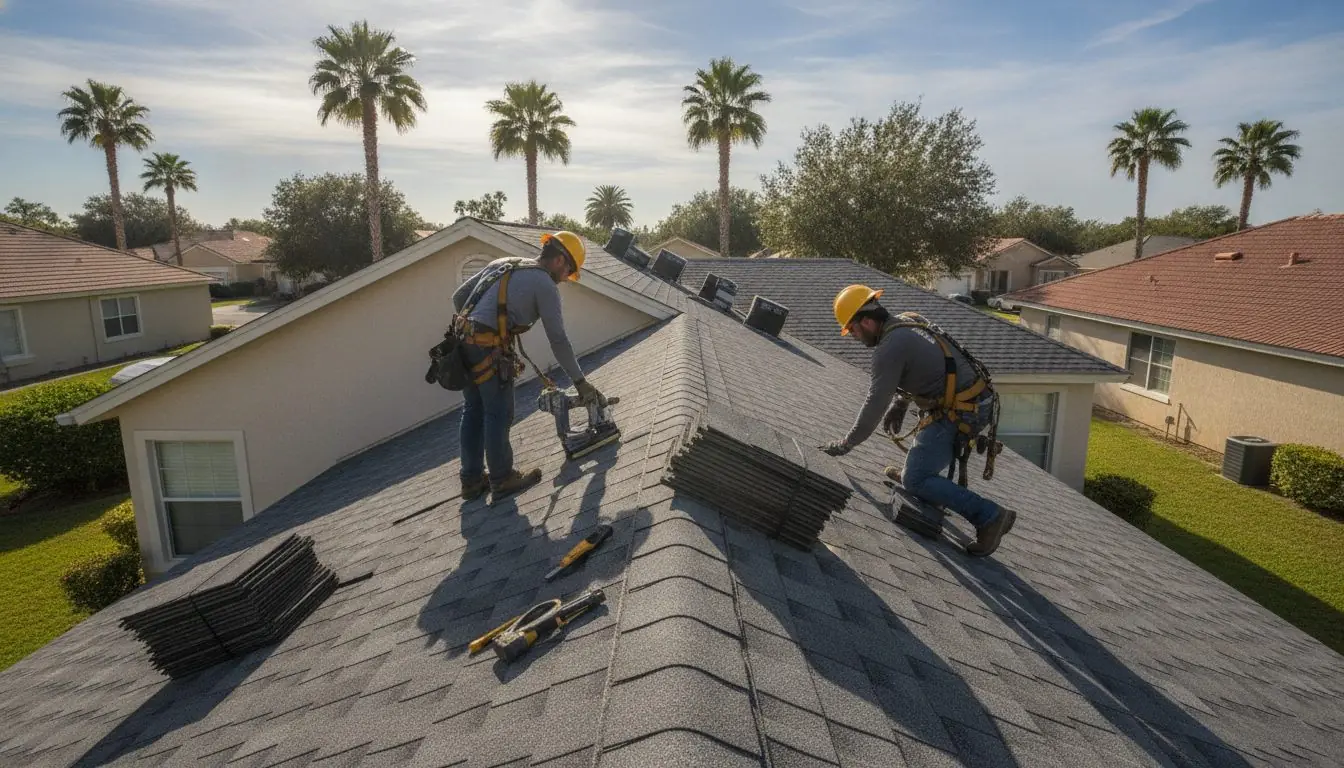
The workmanship warranty is a separate promise from the roofing contractor — not the manufacturer — that the installation itself was done correctly: proper nailing pattern, correct flashing details, adequate ventilation, and code-compliant underlayment. Most roof leaks in the first several years trace back to installation details, not material defects, which is exactly why this warranty matters as much as the manufacturer's.
- Workmanship warranty length and terms are set entirely by the contractor, not the manufacturer — there's no industry-standard length, so compare this term explicitly between bids.
- A workmanship warranty is only as good as the contractor's ability to still be in business and licensed when you need to call on it. Ask how long the company has operated in Central Florida and confirm license status directly with the Florida DBPR license lookup before signing.
- Get the workmanship warranty length and coverage terms in writing as part of the contract, not as a verbal assurance.
Reading a warranty before you sign
Before accepting a roofing bid, ask for the manufacturer warranty documentation and the workmanship warranty terms as separate written items, then check:
- What specific defect or failure each warranty actually covers, in the manufacturer's or contractor's own language — not the salesperson's summary.
- Whether labor cost to remove and replace defective material is included, and for how long.
- Whether the enhanced manufacturer warranty tier requires a specific installer certification, and whether your contractor currently holds it.
- What voids each warranty — unapproved repairs, improper attic ventilation, or work by another contractor can void manufacturer coverage even if the original installation was sound.
Recommended next step
We'll show you exactly which manufacturer warranty tier applies to the products in your proposal and put our workmanship warranty terms in writing before you sign anything — no verbal "lifetime warranty" claims without paperwork behind them.