Why this matters
Central Florida has a lot of tile roofs, especially on homes built from the 1990s onward, and a growing number of standing-seam metal roofs on both new construction and re-roofs. Both are excellent solar substrates — often better than shingle in some respects — but the racking and mounting hardware, and the labor involved, are genuinely different from a standard shingle install. A solar company that only knows shingle roofs can get this wrong in ways that show up later as leaks.
Metal roofs: usually the easiest substrate for solar
Standing-seam metal roofing is, in most cases, the best roof type for solar because standing-seam clamps can attach directly to the raised seams without any roof penetrations at all. No penetrations means no new holes to seal and re-seal over the life of the system — a real advantage over penetrating mounts. Corrugated or exposed-fastener metal roofing, more common on outbuildings and some older installs, does typically require penetrating mounts similar to a shingle install, so the mounting approach depends on which metal profile you actually have.
Tile roofs: more labor, not more risk, when done correctly
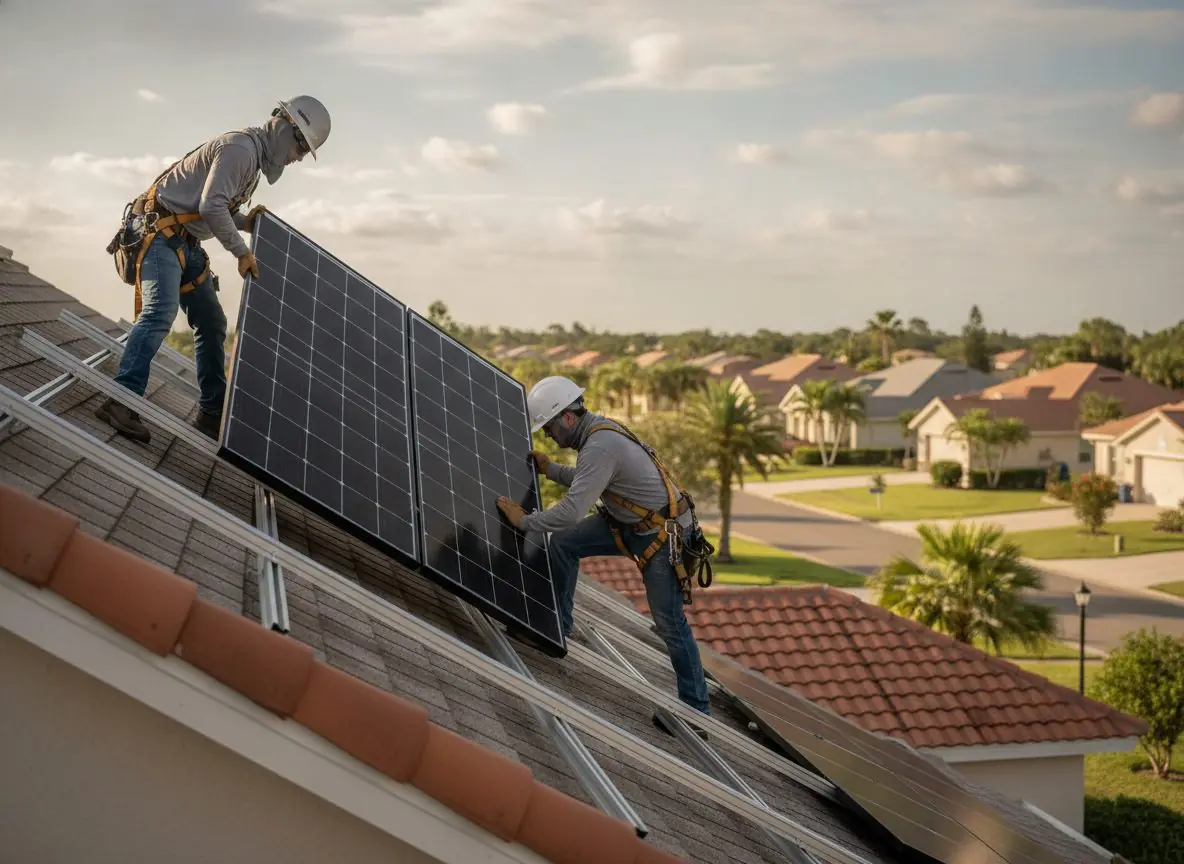
Tile roofing — whether clay or concrete barrel/flat tile — requires tile-specific mounting hardware: typically tile hooks or tile replacement mounts that redirect water around the penetration point rather than relying on the tile itself to seal. Tile is brittle and easy to crack if a crew isn't used to working on it, so the real question to ask an installer is how many tile roofs they've actually completed, not just whether they "can" do tile. Broken or improperly re-set tiles are the most common source of solar-related roof leaks on tile homes, and they are avoidable with the right crew and hardware.
- Tile hooks / mount systems lift the panel racking above the tile surface and route water around the flashing rather than through it.
- Matching tile profile matters — barrel tile, flat tile, and S-tile each need slightly different hardware to seat correctly.
- Replacement tiles should be kept on hand in case any crack or break during the install — ask if this is included.
Roof age and condition come before roof material
Regardless of material, the more important question for any roof is age and remaining service life. Removing and reinstalling a solar system to do a roof replacement a few years later is expensive and avoidable. If your metal or tile roof is more than a decade or two old, it's worth having a real roof inspection as part of the solar conversation — not an afterthought. See our solar installation process guide for how a roof evaluation fits into the overall project sequence.
What to ask a solar installer about your specific roof
- What mounting hardware do you use for my specific roof type and profile?
- How many tile or metal roof solar installs have you personally completed?
- Who handles the roofing side if a tile cracks or a metal panel needs to be modified — is that in-house or subcontracted?
- What's the remaining service life of my current roof, and should that be addressed before or during the solar install?
- What warranty covers the roof penetrations specifically, separate from the solar equipment warranty?
That last question is where a lot of homeowners get an unpleasant surprise — a solar installer's workmanship warranty and a roofing contractor's warranty are not always the same thing, and it matters which one actually covers a leak at a mounting point years down the road.
Recommended next step
Because Crownline installs both roofs and solar systems, the roof evaluation and the solar racking plan happen together, under one warranty conversation, instead of being handled by two separate companies pointing at each other if something goes wrong later.
Request a Free Solar Estimate