Why this matters
Solar pricing is usually quoted as a cost per watt, then multiplied out by system size to get a total project cost. That part hasn't changed. What has changed is the incentive layer sitting on top of that number: the federal residential solar tax credit (Section 25D) ended for any system placed in service after December 31, 2025. If you're reading a cost breakdown anywhere else that assumes a 30% credit reduces your net price, that math is describing 2025 and earlier, not 2026.
Typical cost-per-watt ranges
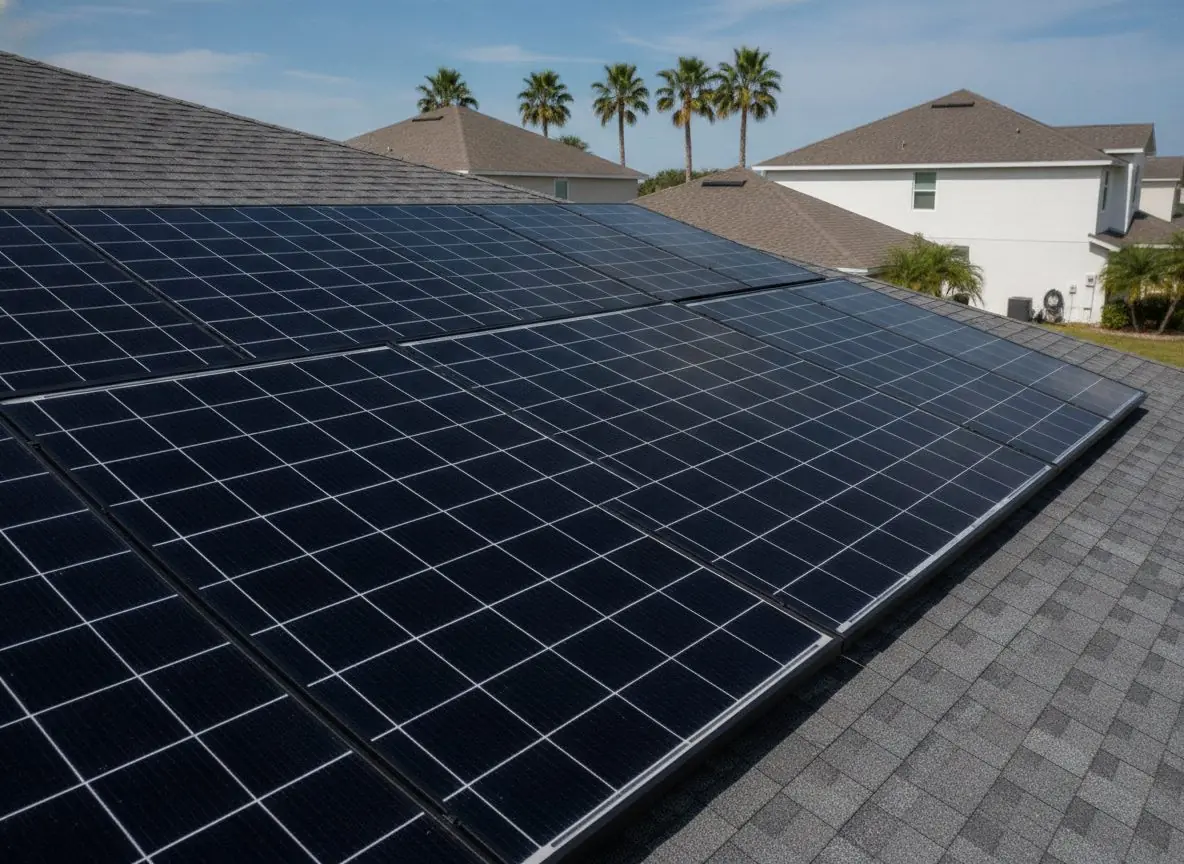
Residential solar in Florida is generally priced on a per-watt basis before incentives, varying with panel brand, inverter type (string vs. microinverter), roof complexity, electrical upgrades needed, and system size. For a real number, ask for a written estimate sized to your roof and your usage.
A typical residential system size for a Central Florida home is sized to the household's annual usage, roof area, and shading — which is why an accurate number always comes from a real site evaluation rather than a generic average. Larger systems generally have a lower effective cost per watt than very small systems, since fixed costs (permitting, interconnection, mobilization) are spread across more capacity.
What actually drives your total price
- System size (kW). Sized to your actual electric usage, not a flat number — pulling 12 months of utility bills gives the most accurate starting point.
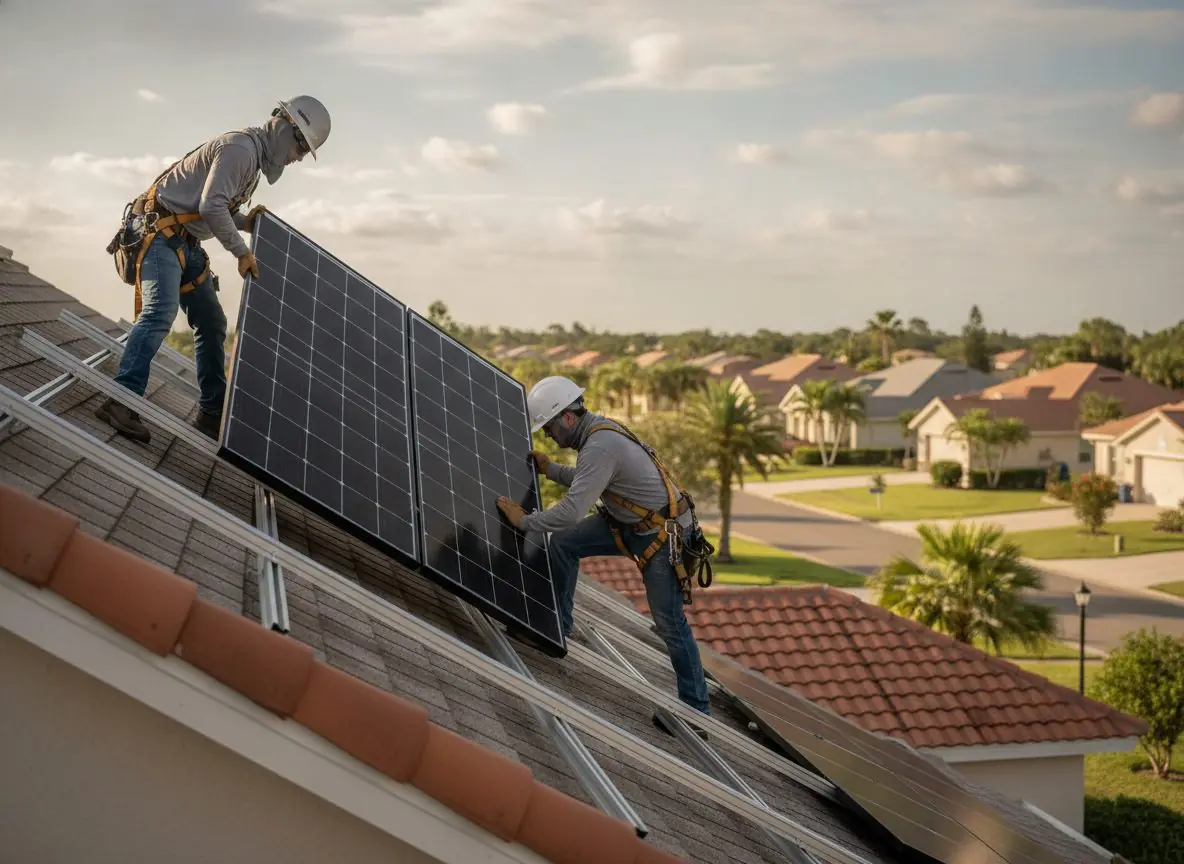
- Roof type and condition. Metal and tile roofs typically require different mounting hardware than shingle roofs, which affects labor and materials (see our guide to solar on metal or tile roofs).
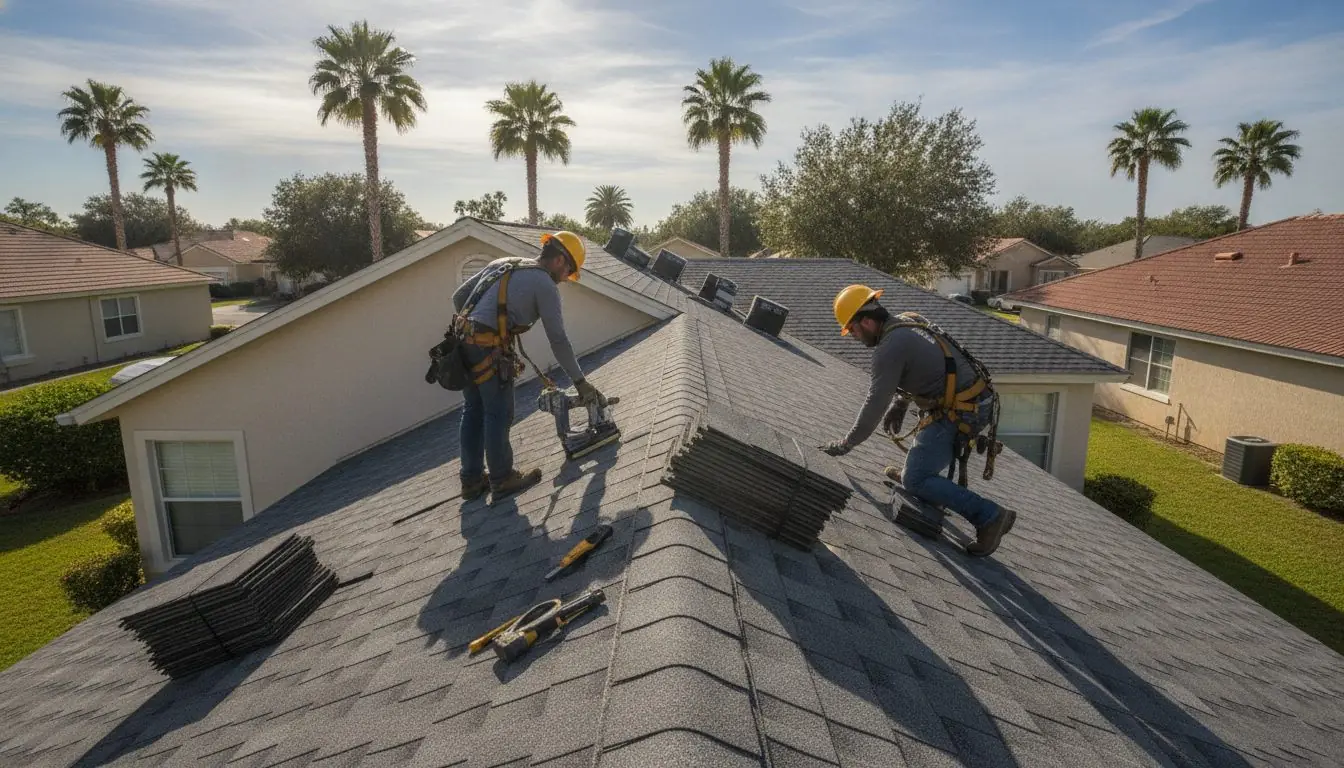
- Roof age. If your roof needs replacement in the next several years, it is usually cheaper to handle that before or during the solar install rather than removing and reinstalling panels later.
- Electrical panel and service upgrades. Older homes sometimes need a panel upgrade to safely support a modern solar system, which adds to project cost.
- Equipment tier. Panel efficiency and inverter type (string inverter vs. microinverters vs. power optimizers) affect both price and long-term performance.
- Battery add-on. Adding battery storage increases upfront cost significantly — see our home battery storage guide for that math separately.
The incentive math that's actually current in 2026
Here is the part that changes the effective cost of a system bought outright in 2026 compared to a system bought in 2024 or 2025: there is no federal tax credit reducing your net cost on a direct purchase anymore. The 30% Section 25D credit that many homeowners budgeted around expired December 31, 2025.
What is still real and still reduces your effective cost in Florida: the state property tax exemption (added home value from solar isn't reassessed), the state sales tax exemption on qualifying solar equipment, and statewide net metering that credits your excess production at the retail electricity rate. For third-party-owned systems — leases and PPAs — a separate federal business credit is still active and phasing out through 2027, which is why lease/PPA pricing may look different from a direct-purchase quote right now. For the full breakdown, read our Solar Incentives in 2026 guide — treat that page as the accuracy reference for any incentive number you see anywhere.
Financing changes the comparison
Because the direct-purchase federal credit is gone, more homeowners are comparing a cash/loan purchase against a lease or PPA than they were in past years, since the lease/PPA structure can still access a federal credit through the business entity that owns the system. Neither option is universally better — a direct purchase builds equity and has no ongoing payment to a third party once paid off, while a lease/PPA shifts the tax benefit to lower a recurring payment. Run both numbers for your specific usage before deciding.
Recommended next step
A real number for your home requires a site evaluation — your roof, your usage history, and your goals (bill offset vs. backup power) all change the math. Crownline evaluates the roof and the solar system together, which matters if your roof is older and might need attention before or during the install.
Request a Free Solar Estimate