Why this matters
Concrete and clay tile roofs are a Central Florida staple, especially on homes built from the 1990s through today in Mediterranean- and Spanish-style developments across Orlando, Windermere, and Winter Garden. Asphalt shingle remains the more common material statewide by volume. Both are legitimate choices — the right one depends on your home's structure, your budget, and how long you're planning to own the house.
Cost differences, up front and over time
Tile costs more to install than asphalt shingle, and that gap widens for clay tile versus concrete tile. Where tile tends to even the math back out is lifespan — a well-installed concrete or clay tile roof can last far longer than a typical asphalt shingle roof, so the per-year cost gap is smaller than the sticker price suggests. If you don't plan to stay in the home for decades, that long-run math matters less than the upfront number.
One cost most people miss: it's not just the tile itself. Tile roofs also carry a heavier underlayment system, and repairs often cost more per visit than shingle repairs because breaking and replacing tiles correctly (without cracking neighboring tiles) takes more time and a different skill set than a typical shingle patch.
Weight, structure, and what your house can carry
Tile is significantly heavier than asphalt shingle — often several times the weight per square. Most homes built for tile from the start have the trusses and structural design to carry that load without issue. But converting a shingle-designed roof to tile is a real structural question, not just a materials swap, and it needs an engineer's sign-off, not a guess. If you're not sure which category your home falls into, that's a question to raise during an inspection before you fall in love with a tile quote.
Wind performance and storm risk
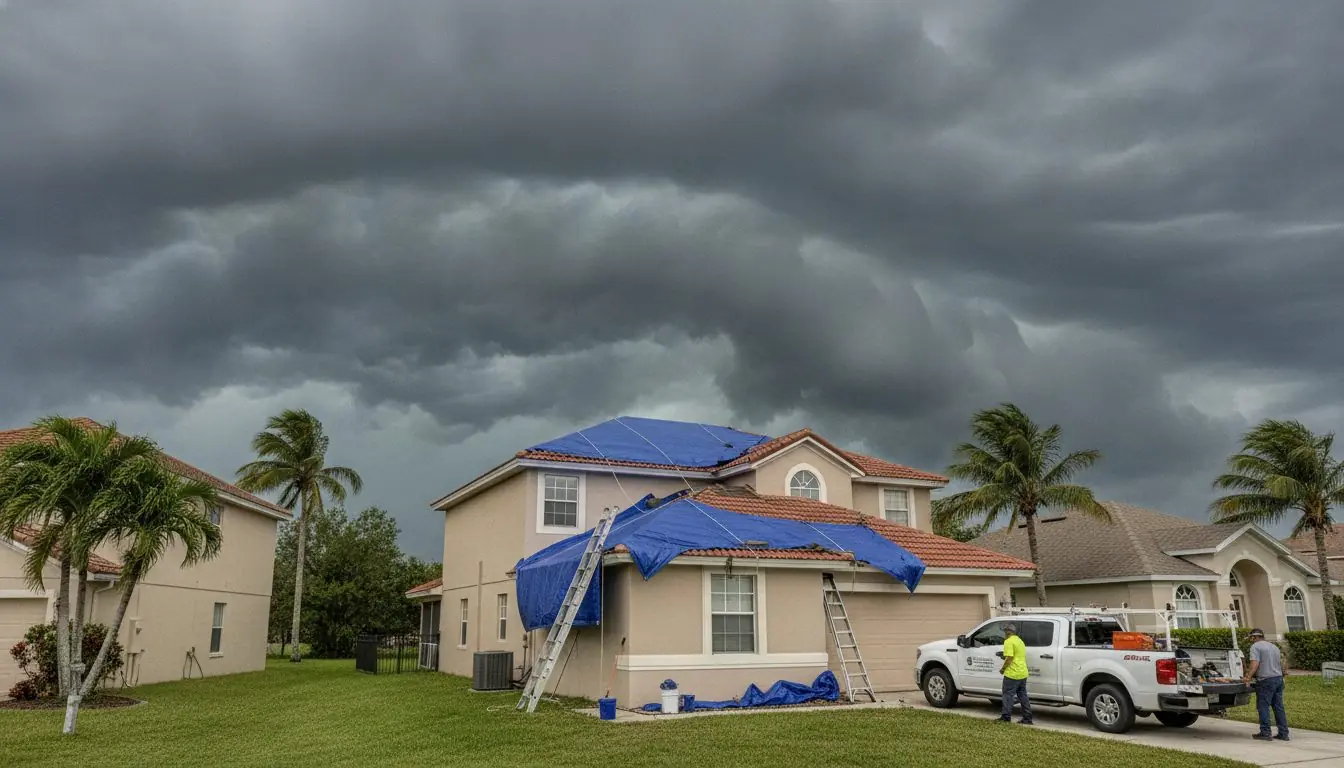
Both materials can meet Florida's wind-uplift codes when installed correctly, but they fail differently in a storm. Properly fastened and adhered tile can perform very well in high wind, but a tile that does come loose becomes a heavier, harder-hitting piece of storm debris than a shingle tab — which is part of why proper fastening (not just mortar-set) and code-compliant underlayment matter even more on a tile roof. Shingles that lift or tear tend to fail more gradually and cause less secondary impact damage to the rest of the roof or nearby property.
After any named storm, both roof types should get a documented inspection — see our post-storm roof inspection checklist if you're not sure what to look for.
Repairs and maintenance realities
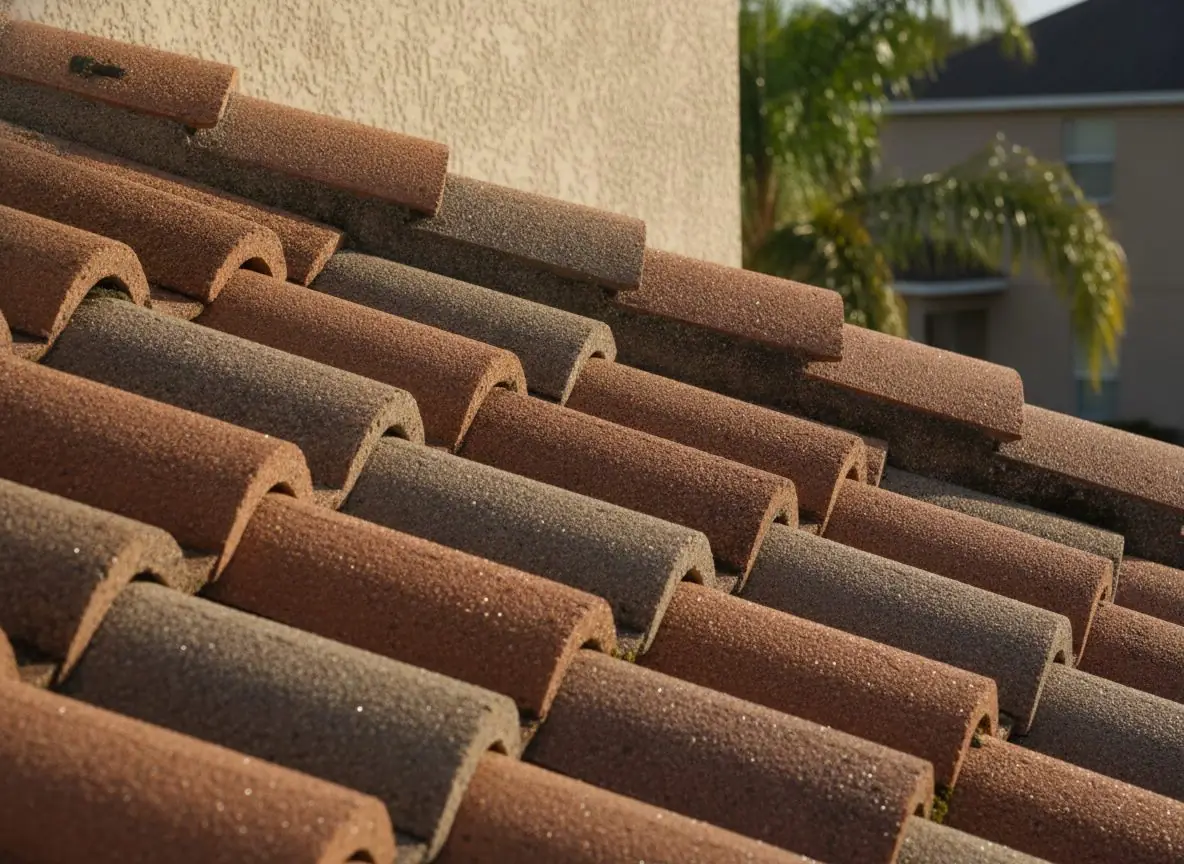
- Tile: individual tiles can crack from foot traffic or debris impact and need matching replacement tiles; the underlayment beneath the tile (not the tile itself) is usually what actually wears out first and drives a full replacement decision.
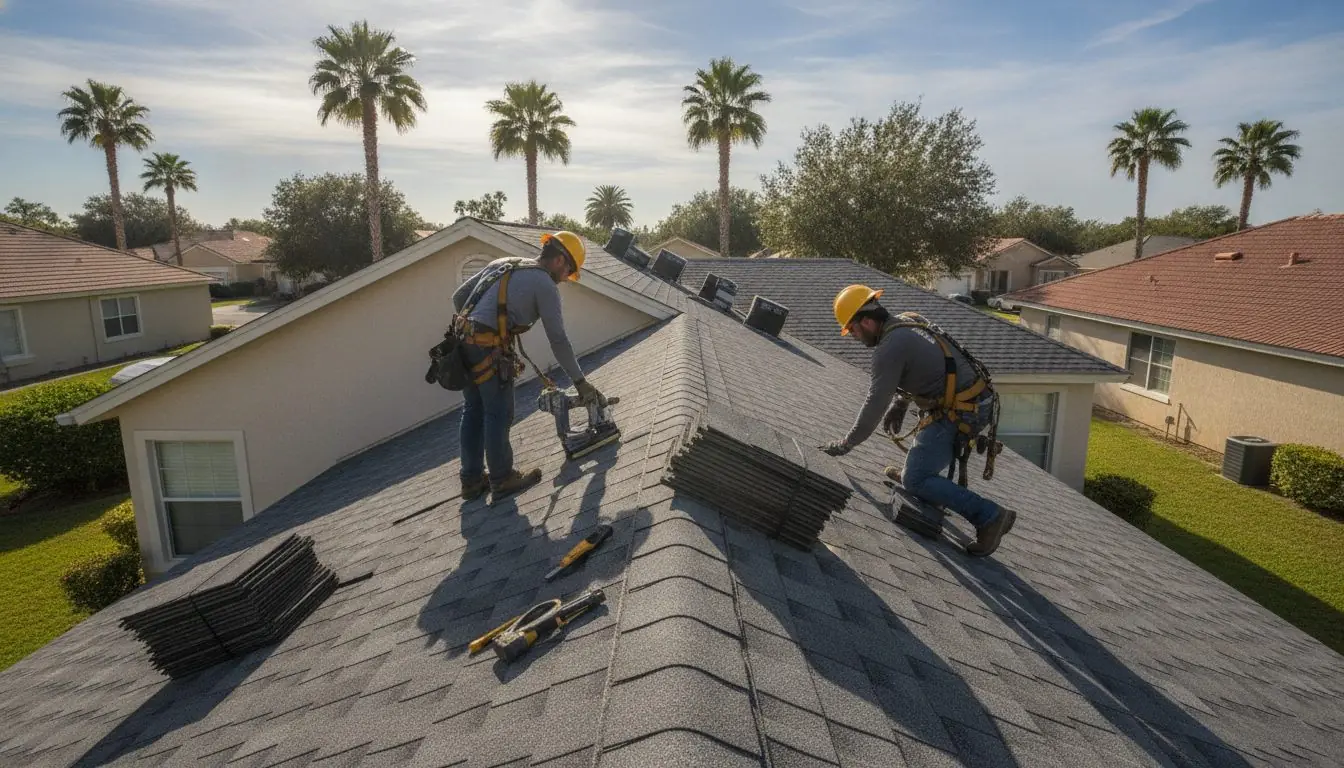
- Shingle: easier and generally faster to patch or partially replace; more visible wear over time (curling, granule loss) that gives you an earlier warning sign something needs attention.
- Both: walking on either roof type incorrectly, or hiring a crew unfamiliar with the specific material, causes a disproportionate share of avoidable damage.
Recommended next step
If your home was built for tile and you're planning to stay long-term, re-roofing in tile again is usually the straightforward call. If you're on a shingle-built structure, converting to tile is a structural conversation before it's a cosmetic one. Either way, get a real inspection and a written scope before comparing bids line by line.
Request a Free Inspection